

DTN Weather Hub Strengthens Utility Outage Response and Grid Reliability
New platform connects decision-grade weather intelligence to real-time operational risk for electric and gas utilities
MINNEAPOLIS, Feb. 03, 2026 (GLOBE NEWSWIRE) -- DTN, a global data and technology company, today announced the launch of DTN Weather Hub for Utilities, a next-generation platform designed to help electric and gas utilities anticipate weather-driven risk, protect crews and assets, reduce outages, and accelerate restoration through faster, more confident operational decisions.
As climate volatility drives more frequent and severe weather events, including high winds, extreme heat, winter storms, flooding, lightning, and wildfires, utilities face growing pressure to maintain grid reliability, ensure worker safety, and minimize customer outages. DTN Weather Hub addresses this challenge by translating weather intelligence into operational insights that utilities can act on before, during, and after high-impact events.
DTN Weather Hub provides a centralized, operational view of weather risk across service territories, assets, and work locations, supporting critical utility needs such as outage prediction, outage preparedness, and restoration planning, as well as crew staging, load management, wildfire mitigation, and system recovery.
“Utilities need more than forecasts. They need to understand how weather will affect specific assets, crews, and customers and the trusted utility-relevant insights to act decisively,” said Renny Vandewege, General Manager for Weather and Climate Intelligence at DTN. “Our data shows that utilities that have predictive site-specific weather intelligence can potentially reduce outage durations by up to 30%.”
Purpose-built for real-world utility operations, DTN Weather Hub delivers:
- Territory-wide weather intelligence: A single, map-based view of hyper-local forecasts across service areas, supporting grid operations and real-time decision-making.
- Asset- and event-based visualization: Real-time weather conditions displayed in context with substations, transmission and distribution assets, work zones, and planned outages to support dispatch and restoration decisions.
- Role- and asset-specific alerting: Threshold-based alerts, risk scores, and notifications aligned with utility-defined safety limits, asset tolerances, and operational protocols to improve crew safety and coordination.
- Peril-specific monitoring: Purpose-built insights for high-impact utility threats, including severe storms, high winds, lightning, heat stress, icing, flooding, wildfires, and tropical systems.
-
Multi-site and system-wide oversight: Centralized monitoring of weather risk across multiple regions and assets to support faster coordination and response across operations teams.
By applying utility-relevant thresholds and industry-specific risk models, DTN Weather Hub enables faster response, shorter outage durations, and improved system reliability as weather conditions change.
To learn more about DTN Weather Hub supports utility operations, visit dtn.com/weatherhub.
About DTN
DTN is a global data and technology company that equips operational leaders in weather-driven industries with the decision speed and intelligence to outpace uncertainty. For decades, DTN has transformed complex data into decision-grade insights that help organizations manage risk and protect people, assets, and operations. DTN operates 24/7 global weather centers in Minneapolis, Utrecht, Sydney, and Manila, and holds more than 160 patents across its portfolio. DTN solutions support critical life-safety decisions for events, public safety agencies, campuses, and large-scale outdoor operations worldwide.
Media Contact:
Lori Johnson
lori.johnson@dtn.com
A photo accompanying this announcement is available at https://www.globenewswire.com/NewsRoom/AttachmentNg/bed8c62a-e136-45ea-9fe8-c0b984e25947


DTN Weather Hub for Utilities
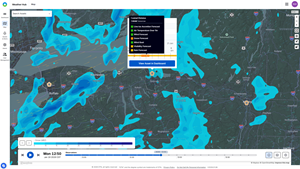
DTN Weather Hub provides a centralized, operational view of weather risk across service territories, assets, and work locations, supporting critical utility needs such as outage prediction, outage preparedness, and restoration planning, as well as crew staging, load management, wildfire mitigation, and system recovery.
Legal Disclaimer:
EIN Presswire provides this news content "as is" without warranty of any kind. We do not accept any responsibility or liability for the accuracy, content, images, videos, licenses, completeness, legality, or reliability of the information contained in this article. If you have any complaints or copyright issues related to this article, kindly contact the author above.
